Balou’s logbook, page by page

An example from the yard: Balou’s book for 2026/27, printed on A4 and punched for a ring binder. First the cover, then the first week before and after seven days of yard work, the plans from the front and a table from the back.
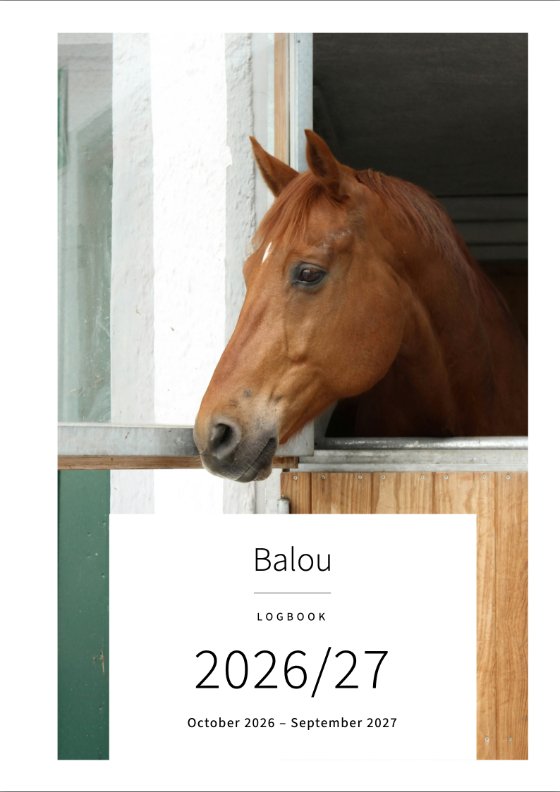
Cover: the photo of a chestnut looking out of the box window, with a white panel reading ‘Balou’, ‘Logbook’, ‘2026/27’
The cover carries the name and the period. A photo is optional; if there is one, the name moves onto a white panel that you place at the top, in the middle or at the bottom.
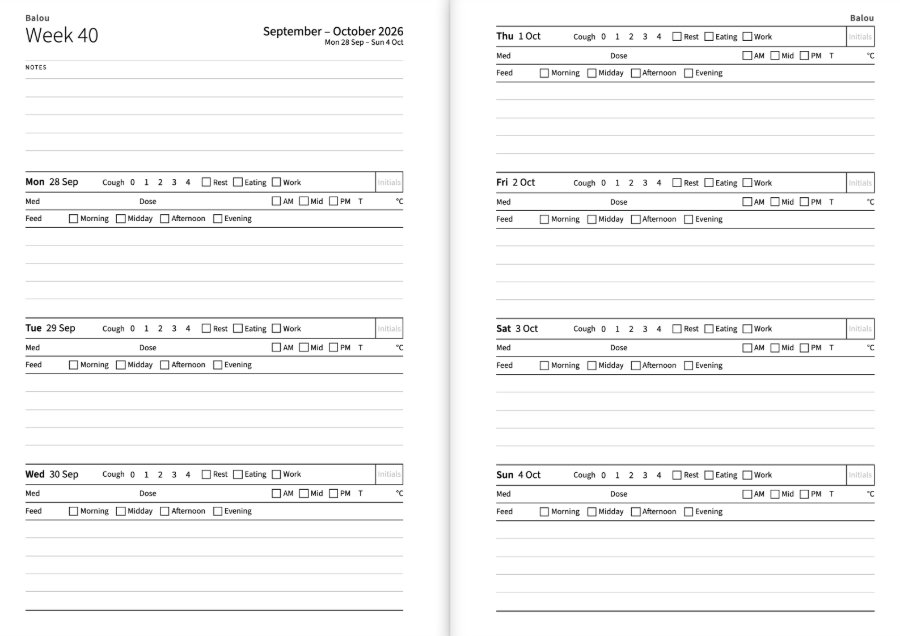
Empty week spread: on the left notes for the week and Monday to Wednesday, on the right Thursday to Sunday
This is how a week comes out of the printer: on the left, room for the week’s notes and the first three days; on the right, the other four.
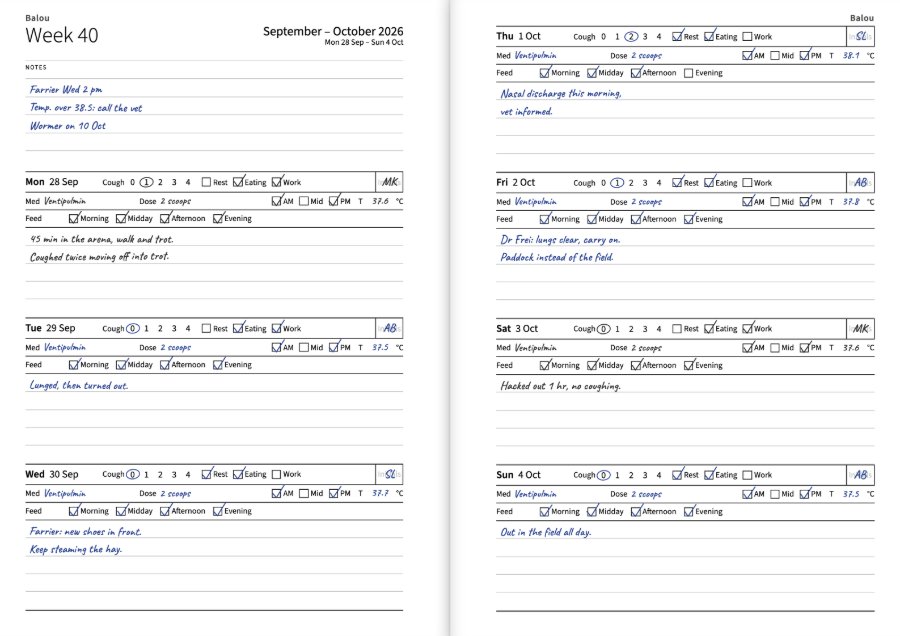
The same week filled in by three people: cough scores circled, medication and meals ticked, temperatures, notes and initials on every day
Seven days later, three people have written in it. On Thursday someone measures 38.1 °C and notes nasal discharge; on Friday the vet’s visit is entered.
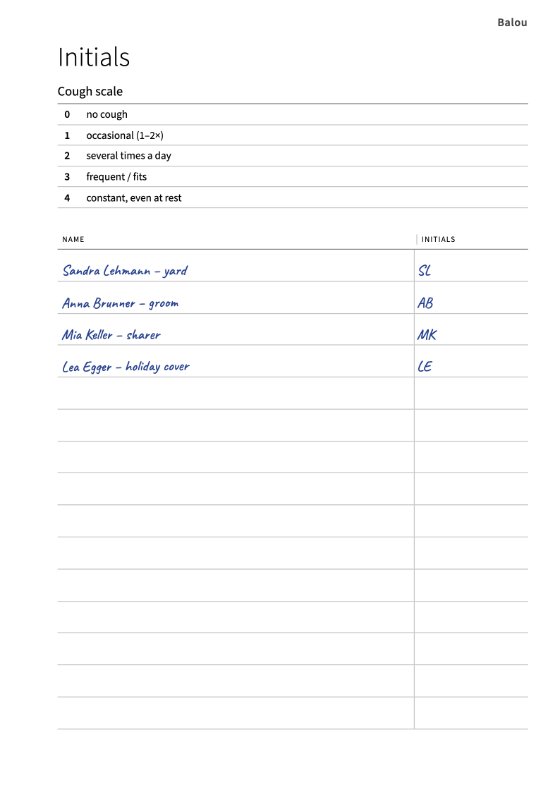
The ‘Initials’ page: the cough scale from 0 to 4 at the top, four names with their initials below
The scale for the cough and the list of initials. The yard writes the names in by hand – over a year, some people join and others leave.
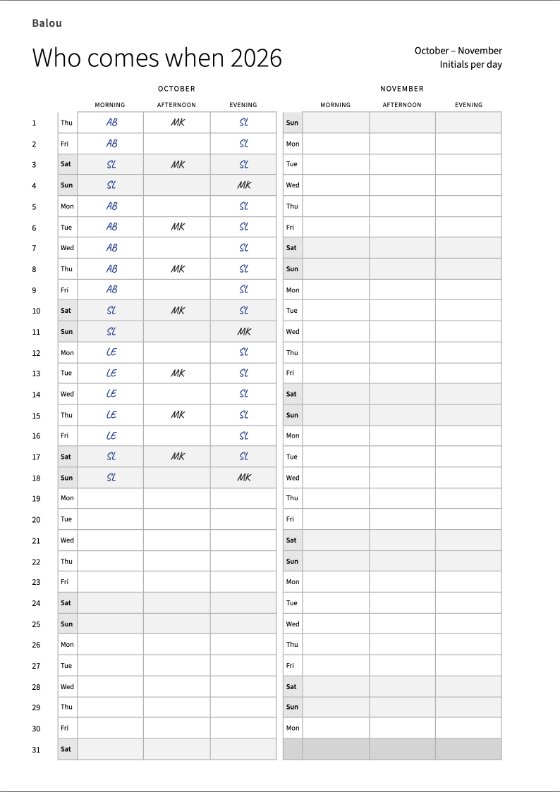
The ‘Who comes when’ page for October and November, with initials for morning, afternoon and evening
‘Who comes when’ is at the front of the book: two months to a page, with three boxes a day for morning, afternoon and evening.
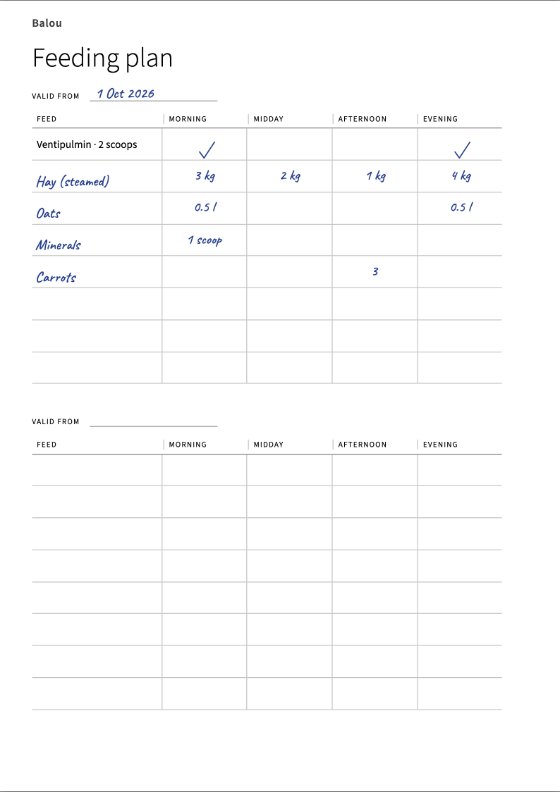
The feeding plan: valid from 1 Oct 2026, hay, oats, minerals and carrots by meal, above them the regular medication
The feeding plan appears twice on the same page, each with ‘valid from’: when the feeding changes, you fill in the second one. Regular medication is already printed in.
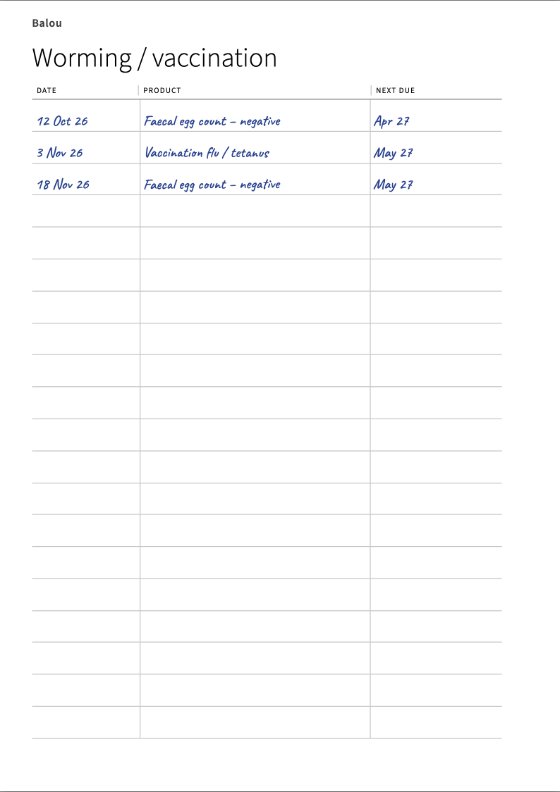
The ‘Worming / vaccination’ table with three entries: date, product, next due
Four tables close the book: vet, farrier, worming and vaccination, weight.

What each day holds

The header line of a day holds the date, a scale from 0 to 4 to circle and three boxes for rest, eating and work. At the right-hand end there is room for initials – so whoever comes in the evening can see who was there in the morning. Below come the medication with its dose and a box each for morning, midday and evening, the temperature, the meals to tick off and lines for observations.

In the example the scale measures the cough. For another horse it can be lameness, itching or free faecal water: you set the name of the scale, the three boxes and the meals for each logbook. Medication, temperature, the feed line and both plans can each be switched off.

You decide when the book starts: with any month, for three, six or twelve months. Six months from October cover the stabling season to the end of March. The horse’s name is at the top of every page – a sheet lying next to the binder finds its way back.

Not shown here: the profile right behind the cover. It holds the year of birth and weight, the phone numbers of vet and farrier, and the normal values for temperature, pulse and respiration – what a stand-in looks for first in an emergency.

Your first year is freeEvery new account gets a full year of logbook for one horse free – 12 months. No payment details needed.